Cactus industry revitalizes karst village in China's Yunnan
Source: Xinhua | 2026-06-23 | Editor:Evan
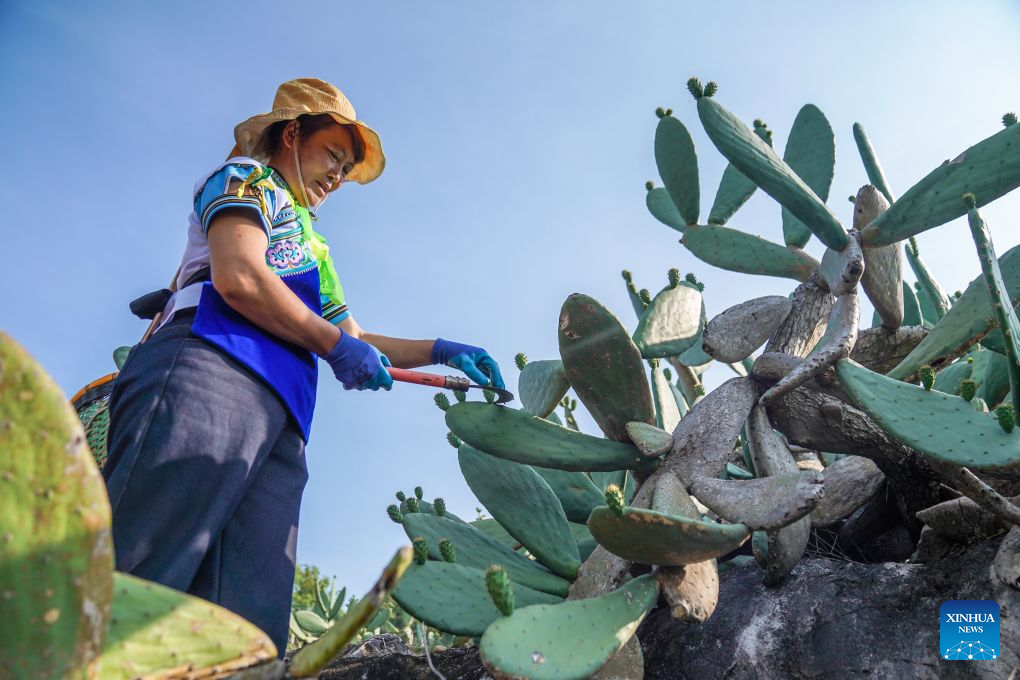
A villager harvests prickly pears in Zhuangzitian Village of Wenshan City, southwest China's Yunnan Province, May 15, 2026. Once a village with little industry and few means of livelihood, Zhuangzitian in southwest China's Yunnan Province has blossomed into the country's major hub of cactus cultivation.
In the past, rocky desertification from the karst landscape left 80 percent of the village's land barren, driving most young people to seek work elsewhere. Yet on the white rocky hills, cacti have thrived for more than 200 years, growing with remarkable resilience.
The cactus's ability to thrive in poor soil and withstand drought makes it a natural savior for the rocky, desertified mountains. Its thick leaves are packed with dietary fiber, minerals and vitamins, finding wide use in food and beverages, medicine, and cosmetics.
The village head of Zhuangzitian recognized the market potential of cacti and led villagers in cultivating cacti in 2019.
By the end of 2025, the local cactus planting area had expanded to over 5,000 mu (about 333.33 hectares), with the vegetation coverage rate rising to 75 percent.
Diverse cactus-related businesses such as deep processing, catering, and cultural tourism have been developed in the village. (Xinhua/Peng Yikai)
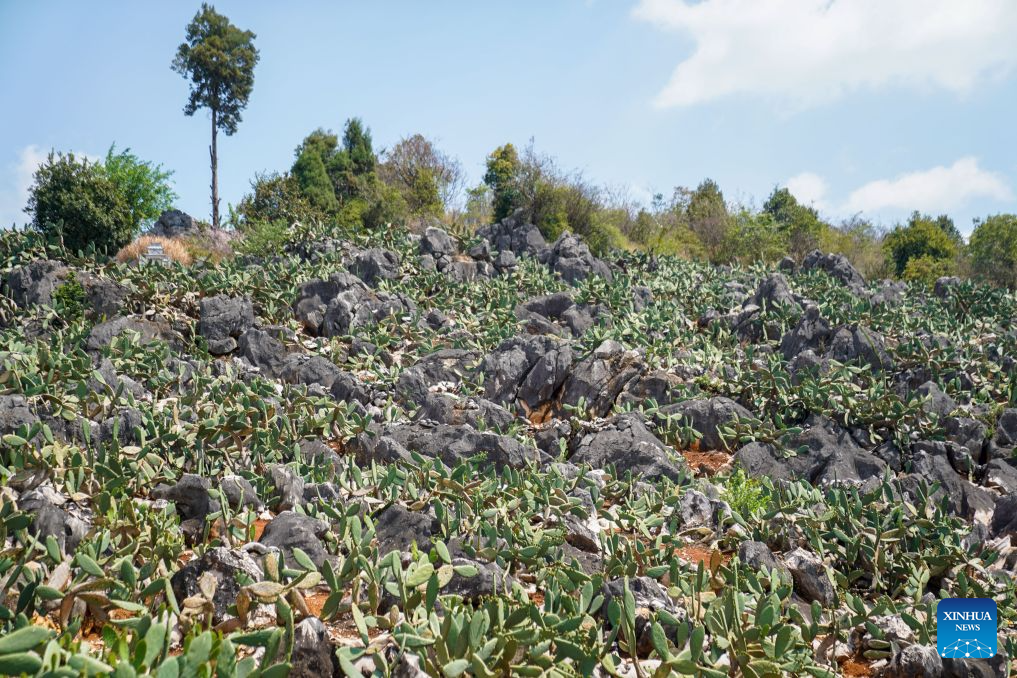
This photo taken on May 15, 2026 shows cacti in Zhuangzitian Village of Wenshan City, southwest China's Yunnan Province. Once a village with little industry and few means of livelihood, Zhuangzitian in southwest China's Yunnan Province has blossomed into the country's major hub of cactus cultivation.
In the past, rocky desertification from the karst landscape left 80 percent of the village's land barren, driving most young people to seek work elsewhere. Yet on the white rocky hills, cacti have thrived for more than 200 years, growing with remarkable resilience.
The cactus's ability to thrive in poor soil and withstand drought makes it a natural savior for the rocky, desertified mountains. Its thick leaves are packed with dietary fiber, minerals and vitamins, finding wide use in food and beverages, medicine, and cosmetics.
The village head of Zhuangzitian recognized the market potential of cacti and led villagers in cultivating cacti in 2019.
By the end of 2025, the local cactus planting area had expanded to over 5,000 mu (about 333.33 hectares), with the vegetation coverage rate rising to 75 percent.
Diverse cactus-related businesses such as deep processing, catering, and cultural tourism have been developed in the village. (Xinhua/Peng Yikai)
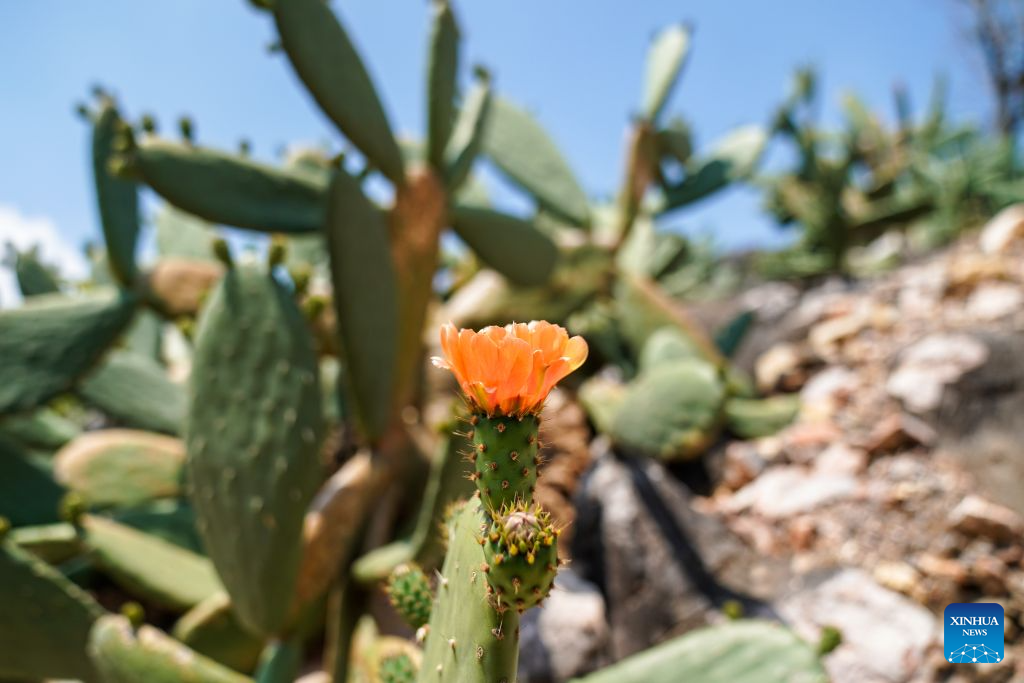
This photo taken on May 15, 2026 shows a prickly pear flower in Zhuangzitian Village of Wenshan City, southwest China's Yunnan Province. Once a village with little industry and few means of livelihood, Zhuangzitian in southwest China's Yunnan Province has blossomed into the country's major hub of cactus cultivation.
In the past, rocky desertification from the karst landscape left 80 percent of the village's land barren, driving most young people to seek work elsewhere. Yet on the white rocky hills, cacti have thrived for more than 200 years, growing with remarkable resilience.
The cactus's ability to thrive in poor soil and withstand drought makes it a natural savior for the rocky, desertified mountains. Its thick leaves are packed with dietary fiber, minerals and vitamins, finding wide use in food and beverages, medicine, and cosmetics.
The village head of Zhuangzitian recognized the market potential of cacti and led villagers in cultivating cacti in 2019.
By the end of 2025, the local cactus planting area had expanded to over 5,000 mu (about 333.33 hectares), with the vegetation coverage rate rising to 75 percent.
Diverse cactus-related businesses such as deep processing, catering, and cultural tourism have been developed in the village. (Xinhua/Peng Yikai)
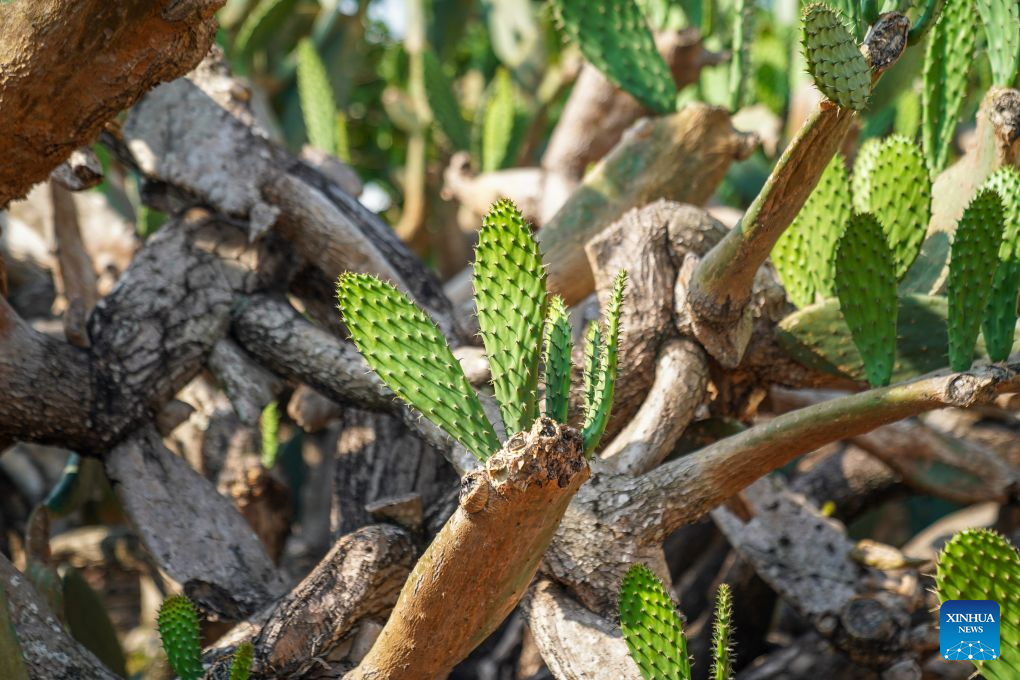
This photo taken on May 15, 2026 shows cacti in Zhuangzitian Village of Wenshan City, southwest China's Yunnan Province. Once a village with little industry and few means of livelihood, Zhuangzitian in southwest China's Yunnan Province has blossomed into the country's major hub of cactus cultivation.
In the past, rocky desertification from the karst landscape left 80 percent of the village's land barren, driving most young people to seek work elsewhere. Yet on the white rocky hills, cacti have thrived for more than 200 years, growing with remarkable resilience.
The cactus's ability to thrive in poor soil and withstand drought makes it a natural savior for the rocky, desertified mountains. Its thick leaves are packed with dietary fiber, minerals and vitamins, finding wide use in food and beverages, medicine, and cosmetics.
The village head of Zhuangzitian recognized the market potential of cacti and led villagers in cultivating cacti in 2019.
By the end of 2025, the local cactus planting area had expanded to over 5,000 mu (about 333.33 hectares), with the vegetation coverage rate rising to 75 percent.
Diverse cactus-related businesses such as deep processing, catering, and cultural tourism have been developed in the village. (Xinhua/Peng Yikai)

A villager checks the conditions of cacti in Zhuangzitian Village of Wenshan City, southwest China's Yunnan Province, May 15, 2026. Once a village with little industry and few means of livelihood, Zhuangzitian in southwest China's Yunnan Province has blossomed into the country's major hub of cactus cultivation.
In the past, rocky desertification from the karst landscape left 80 percent of the village's land barren, driving most young people to seek work elsewhere. Yet on the white rocky hills, cacti have thrived for more than 200 years, growing with remarkable resilience.
The cactus's ability to thrive in poor soil and withstand drought makes it a natural savior for the rocky, desertified mountains. Its thick leaves are packed with dietary fiber, minerals and vitamins, finding wide use in food and beverages, medicine, and cosmetics.
The village head of Zhuangzitian recognized the market potential of cacti and led villagers in cultivating cacti in 2019.
By the end of 2025, the local cactus planting area had expanded to over 5,000 mu (about 333.33 hectares), with the vegetation coverage rate rising to 75 percent.
Diverse cactus-related businesses such as deep processing, catering, and cultural tourism have been developed in the village. (Xinhua/Peng Yikai)

A staff member makes cactus dishes at a restaurant in Zhuangzitian Village of Wenshan City, southwest China's Yunnan Province, May 15, 2026. Once a village with little industry and few means of livelihood, Zhuangzitian in southwest China's Yunnan Province has blossomed into the country's major hub of cactus cultivation.
In the past, rocky desertification from the karst landscape left 80 percent of the village's land barren, driving most young people to seek work elsewhere. Yet on the white rocky hills, cacti have thrived for more than 200 years, growing with remarkable resilience.
The cactus's ability to thrive in poor soil and withstand drought makes it a natural savior for the rocky, desertified mountains. Its thick leaves are packed with dietary fiber, minerals and vitamins, finding wide use in food and beverages, medicine, and cosmetics.
The village head of Zhuangzitian recognized the market potential of cacti and led villagers in cultivating cacti in 2019.
By the end of 2025, the local cactus planting area had expanded to over 5,000 mu (about 333.33 hectares), with the vegetation coverage rate rising to 75 percent.
Diverse cactus-related businesses such as deep processing, catering, and cultural tourism have been developed in the village. (Xinhua/Peng Yikai)
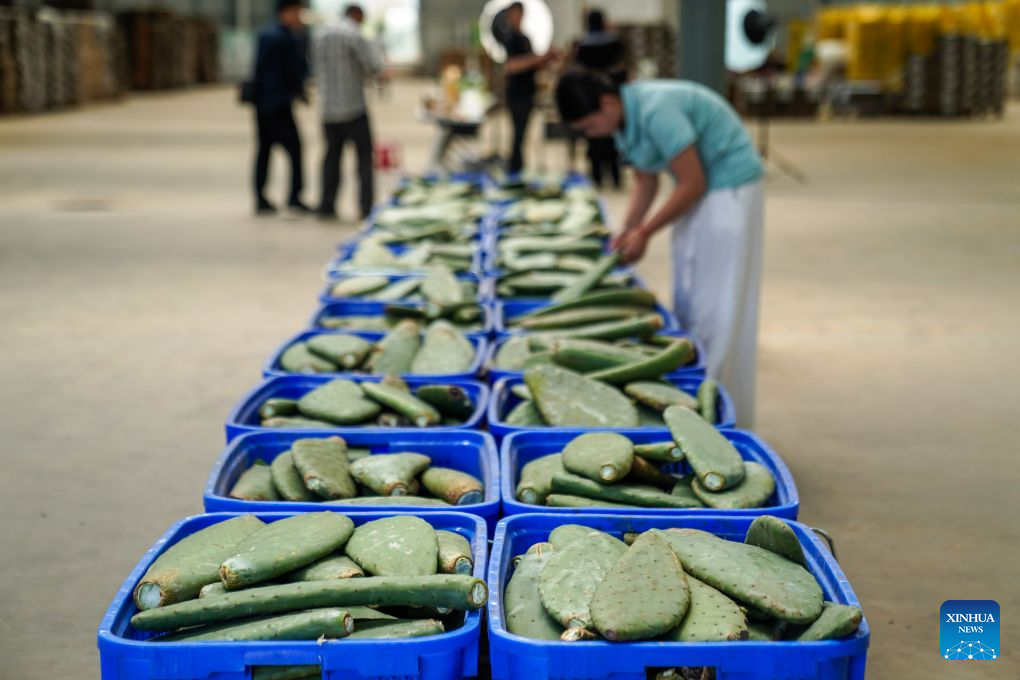
A worker sorts cacti at a processing factory in Zhuangzitian Village of Wenshan City, southwest China's Yunnan Province, May 15, 2026. Once a village with little industry and few means of livelihood, Zhuangzitian in southwest China's Yunnan Province has blossomed into the country's major hub of cactus cultivation.
In the past, rocky desertification from the karst landscape left 80 percent of the village's land barren, driving most young people to seek work elsewhere. Yet on the white rocky hills, cacti have thrived for more than 200 years, growing with remarkable resilience.
The cactus's ability to thrive in poor soil and withstand drought makes it a natural savior for the rocky, desertified mountains. Its thick leaves are packed with dietary fiber, minerals and vitamins, finding wide use in food and beverages, medicine, and cosmetics.
The village head of Zhuangzitian recognized the market potential of cacti and led villagers in cultivating cacti in 2019.
By the end of 2025, the local cactus planting area had expanded to over 5,000 mu (about 333.33 hectares), with the vegetation coverage rate rising to 75 percent.
Diverse cactus-related businesses such as deep processing, catering, and cultural tourism have been developed in the village. (Xinhua/Peng Yikai)

A live streamer promotes cactus products at a processing factory in Zhuangzitian Village of Wenshan City, southwest China's Yunnan Province, May 15, 2026. Once a village with little industry and few means of livelihood, Zhuangzitian in southwest China's Yunnan Province has blossomed into the country's major hub of cactus cultivation.
In the past, rocky desertification from the karst landscape left 80 percent of the village's land barren, driving most young people to seek work elsewhere. Yet on the white rocky hills, cacti have thrived for more than 200 years, growing with remarkable resilience.
The cactus's ability to thrive in poor soil and withstand drought makes it a natural savior for the rocky, desertified mountains. Its thick leaves are packed with dietary fiber, minerals and vitamins, finding wide use in food and beverages, medicine, and cosmetics.
The village head of Zhuangzitian recognized the market potential of cacti and led villagers in cultivating cacti in 2019.
By the end of 2025, the local cactus planting area had expanded to over 5,000 mu (about 333.33 hectares), with the vegetation coverage rate rising to 75 percent.
Diverse cactus-related businesses such as deep processing, catering, and cultural tourism have been developed in the village. (Xinhua/Peng Yikai)
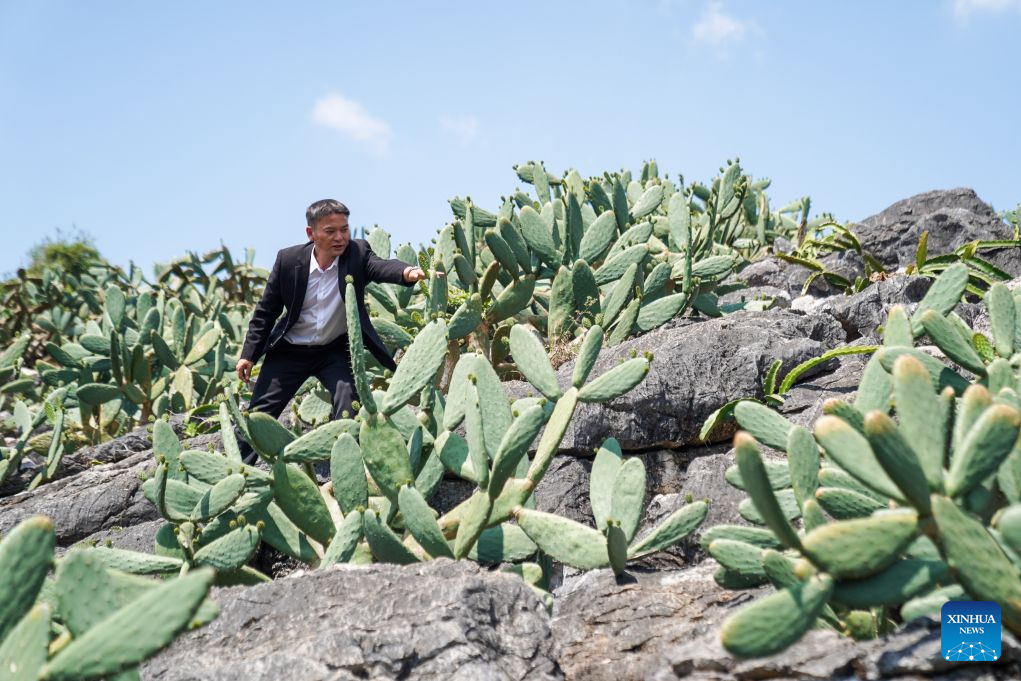
A village cadre checks the conditions of cacti in Zhuangzitian Village of Wenshan City, southwest China's Yunnan Province, May 15, 2026. Once a village with little industry and few means of livelihood, Zhuangzitian in southwest China's Yunnan Province has blossomed into the country's major hub of cactus cultivation.
In the past, rocky desertification from the karst landscape left 80 percent of the village's land barren, driving most young people to seek work elsewhere. Yet on the white rocky hills, cacti have thrived for more than 200 years, growing with remarkable resilience.
The cactus's ability to thrive in poor soil and withstand drought makes it a natural savior for the rocky, desertified mountains. Its thick leaves are packed with dietary fiber, minerals and vitamins, finding wide use in food and beverages, medicine, and cosmetics.
The village head of Zhuangzitian recognized the market potential of cacti and led villagers in cultivating cacti in 2019.
By the end of 2025, the local cactus planting area had expanded to over 5,000 mu (about 333.33 hectares), with the vegetation coverage rate rising to 75 percent.
Diverse cactus-related businesses such as deep processing, catering, and cultural tourism have been developed in the village. (Xinhua/Peng Yikai)
You May Like
-
Feature: China harnesses modern smart-tech to protect wildli...
While wild Asian elephants are enjoying their far-ranging treks in southwest China's Yunnan Province, conservators and researchers can closely track and study...
InKunming 2026-05-22 -
Starbucks teams up with Chinese university to boost coffee i...
A university in Yunnan Province, a renowned coffee production base in southwest China, has partnered with Starbucks to nurture homegrown talent for the boomin...
InKunming 2026-05-22 -
Waterfall clusters attract tourists in Jinping, China's Yunn...
InKunming 2026-05-19 -
Chinese vice premier urges consolidation of poverty alleviat...
Chinese Vice Premier Liu Guozhong has urged more efforts to steadily advance regular assistance and continue to consolidate and expand the achievements of pover...
InKunming 2026-05-15 -
Yunnan model creates biological sanctuary for province's wil...
InKunming 2026-05-12 -
A Letter from Kunming | Rain Falls on the Mountain Forests, ...
Invitation from the hills — to visit this highland city, discover the magic of Yunnan’s wild mushrooms.
InKunming 2026-05-09 -
"Experience economy" brews new vitality for Yunnan coffee
In the lush mountains of Pu'er in southwest China's Yunnan Province, Liu Xiaodong, head of a coffee estate, runs a "field classroom" in his coffee plantation.
InKunming 2026-05-08 -
BASE-jumpers take flight over Yunnan's Nizhuhe Grand Canyon
From towering cliffs to beautiful scenery, Nizhuhe Grand Canyon in Southwest China's Yunnan is attracting thrill-seekers from across the globe.
InKunming 2026-05-06 -
Chinese bamboo products go global, powering sustainable deve...
Under the spring sunshine, vast stands of bamboo are shooting up in the mountains of southwest China's Yunnan Province.
InKunming 2026-05-06 -
Faces of China: Young inheritor revives traditional dance wi...
Yang Yuni, of China's Hani ethnic group, is bringing new life to Lezuo dance, a national-level intangible cultural heritage.
InKunming 2026-05-06