Sticky rice and stories of a nation
Source: China Daily | 2026-03-31 | Editor:Flynn
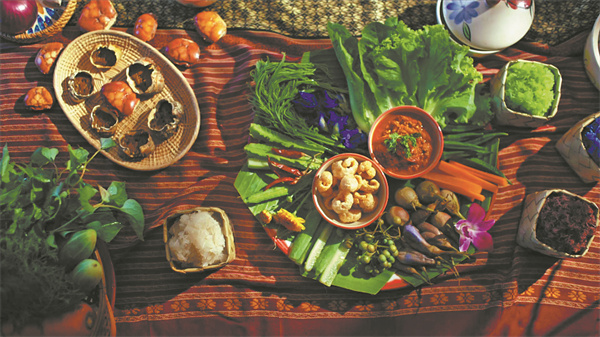
Sticky rice served with a northern Thai dipping sauce, as featured in documentary Tasteful Thailand, a China-Thailand co-production. CHINA DAILY
"If there were no sticky rice in the world, I think some people wouldn't be able to survive. I feel like the sky would literally fall," Phanuphon Bulsuwan, the top chef who runs Blackitch Artisan Kitchen in the Nimmanhaemin neighborhood of Chiang Mai, says and opens the food documentary Tasteful Thailand with this opinion in front of the camera.
Co-produced by WeTV, the overseas version of Tencent Video, and DOClabs Beijing and supported by the Tourism Authority of Thailand, the documentary is currently airing on Tencent Video in China, and WeTV in overseas markets.
As the first international attempt by renowned food documentary director Chen Xiaoqing's team to systematically delve into a complete foreign culinary system, the series uses 10 Thai flavors as "keys" to unlock 10 new discoveries about Thailand, aiming to provide contemporary young audiences with an in-depth culinary travel guide to Thailand.
In the show, Phanuphon not only shares his obsession with sticky rice, but also reveals the cultural roots behind this ingredient. Having lived in Chiang Mai for 40 years, he loves the cool climate of the rainy season there. To him, sticky rice is the foundation for growth and the primary source of energy for the people of Northern and Northeastern Thailand.
He explains that the flavors of Northern Thai cuisine are mostly salty, spicy and bitter, with almost no sweetness, and the distinct sweetness of sticky rice balances out these flavors.
In Phanuphon's restaurant, he is dedicated to passing this cultural energy on to his diners, even transforming sticky rice into different forms like rice paste and rice noodles, allowing guests to inadvertently complete their tasting of "rice".
He says: "If the food we rely on for survival disappears, culture will disappear, and cultural and living traditions will also cease to exist."
Based precisely on this logic of "food as the foundation of culture", the documentary's producer Zhu Lexian believes that food is the most basic entry point into a foreign culture.
"It is one of the most fundamental ways for humans to perceive the world," he says, noting that this intuitiveness lies in the fact that when food chemically reacts with the protease enzyme in the mouth, that shock "doesn't need someone else to translate for you".
Tasteful Thailand adopts a first-person narrative, inviting 10 top Thai chefs to serve as spokespeople for their hometowns and their ingredients. Zhu emphasizes that the team deliberately constructed a multi-dimensional Thailand during the planning phase: the "streets" as commercial spaces, the "family" as an emotional anchor, and the "countryside" symbolizing the nation's roots.
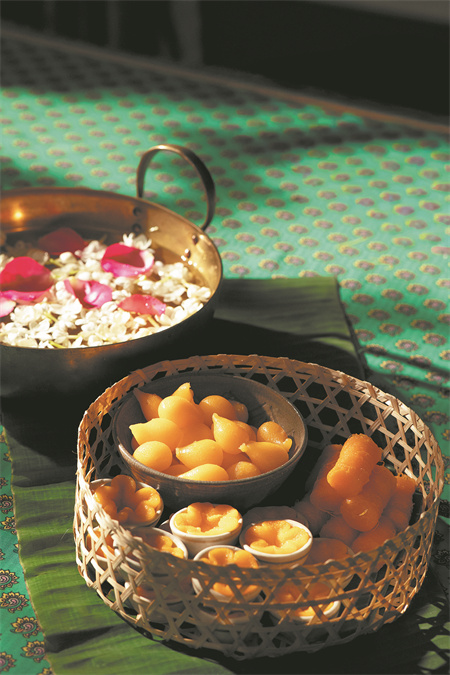
Traditional Thai desserts symbolizing good fortune. CHINA DAILY
The program focuses its lens on these three core scenes. In the old streets and alleys of Bangkok, the streets are not only commercial spaces but also the "living rooms" and "cafeterias" of ordinary Thai people, carrying what Zhu calls the "philosophy of street life".
When filming these street scenes, the crew deliberately avoided internet-famous "check-in" spots, turning instead to old Bangkok neighborhoods and early morning markets to capture the authentic, vibrant atmosphere of this everyday street culture.
Zhu specifically mentioned yen ta fo, a signature Thai pink noodle soup in Bangkok's Chinatown. This dish, created by the fusion of red fermented bean curd brought by Chinese immigrants with local flavors, vividly demonstrates the alienation and subsequent rebirth of flavors during the migration process.
He says: "Once a flavor leaves its hometown, it will find its own way in a new land." This reflects a profound immigrant culture, proving that the world has produced "so many wonderful new things" through communication and exchange.
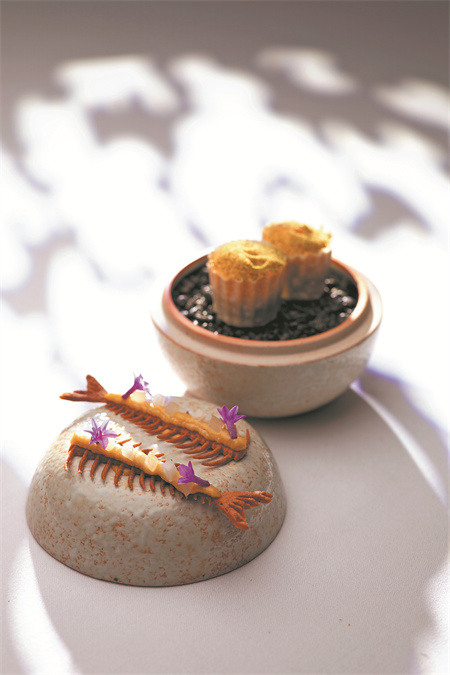
An inventive mackerel dish. CHINA DAILY
Despite facing cultural challenges during filming in Thailand, such as securing image rights and consent, the team impressed several Michelin-starred chefs with their sincerity and professionalism. These chefs were willing to make exceptions, cooperate with the crew, and lead viewers deep into the "hidden corners" where they seek inspiration.
To comprehensively showcase this multi-dimensional culture, the production crew covered the whole of Thailand.
Starting with filming sticky rice in the northern province of Chiang Mai, they traveled east to Khon Kaen province and Udon Thani to gather lemongrass and pla ra, a traditional fermented fish paste, ventured south to Koh Samui in search of pure coconut milk, and to Phuket province for chili.
They then returned to the central region to uncover the secrets of palm sugar in Phetchaburi province and mackerel in Samut Songkhram province.
The journey also included exploring the charm of fusion desserts and yen ta fo in the capital city, Bangkok. Zhu explains that the reason for choosing such a widespread geographical area was their hope that they could present a "panorama of Thailand", covering the country's north, south, east and west.
Many Chinese tourists may have only visited Bangkok or Chiang Mai, but this production aims to open up new avenues for Chinese audiences to explore by filming in a variety of landscapes, including mountains, plains, oceans and paddy fields, showcasing a diverse and colorful nation.
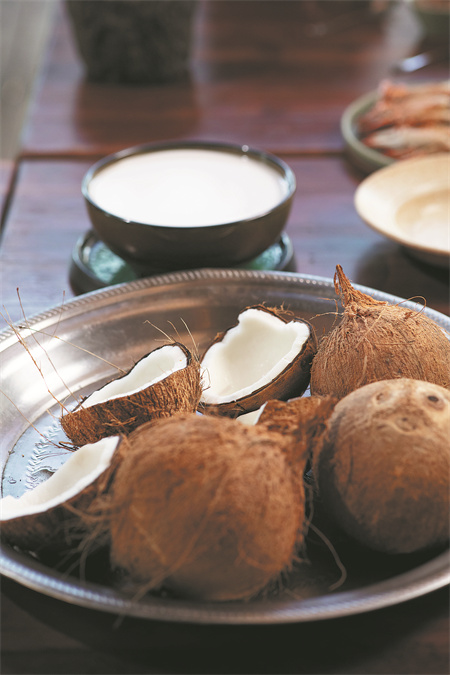
Fresh coconut milk. CHINA DAILY
In Zhu's view, this in-depth visual presentation can help Chinese tourists build a deeper understanding of Thailand. He says that modern tourism often devolves into an assembly line of "checking in and taking photos" to post on social media, and this superficial approach makes it difficult for people to truly experience local culture.
He hopes that Tasteful Thailand will provide some cognitive awareness, enabling audiences to "look at the outside world and see people who are different from us, but who may possess the same wisdom as us".
As the program is simultaneously broadcast on WeTV, this culinary journey invites international audiences to move beyond mere taste, serving as a vibrant bridge for cross-cultural exchange and global understanding.
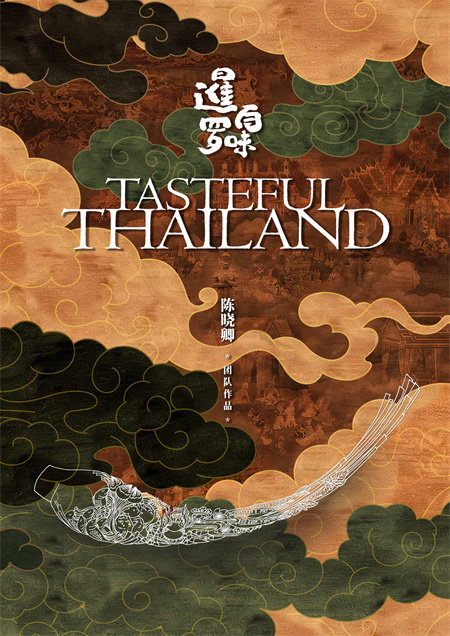
A poster of the documentary. CHINA DAILY
Tasteful Thailand is just the beginning. Zhu reveals that Tencent Video and DOClabs have more ambitious overseas filming plans for the future. They may also continue to explore Thailand, launching a second season of the documentary to showcase all aspects of Thai culture, including intangible cultural heritage, the film and television industry, Muay Thai culture, and a deeper look at the culture of street vendors.
This exploration extends far beyond a mere cataloging of flavors; it represents a genuine dialogue between civilizations. As Zhu suggests, while a documentary might not immediately alter daily routines or professional trajectories, it acts as a sumptuous feast for the senses.
Ultimately, this cinematic journey serves to enrich every individual who yearns for discovery, allowing the human spirit to grow fuller and more abundant through the simple act of witnessing a vast and diverse world.
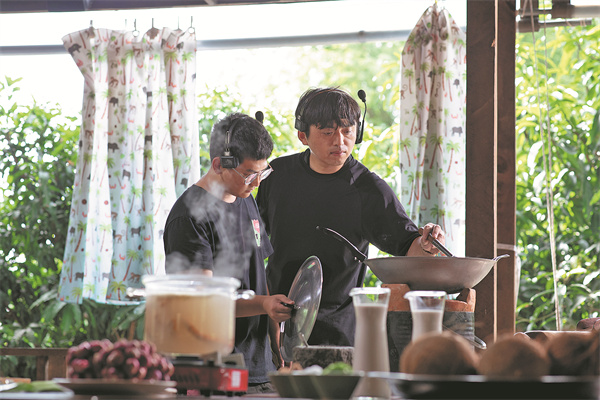
The film crew at work during shooting. CHINA DAILY