Tang Dynasty tomb with exquisite artifacts unearthed in Xi'an
Source: Xinhua | 2026-01-07 | Editor:Evan
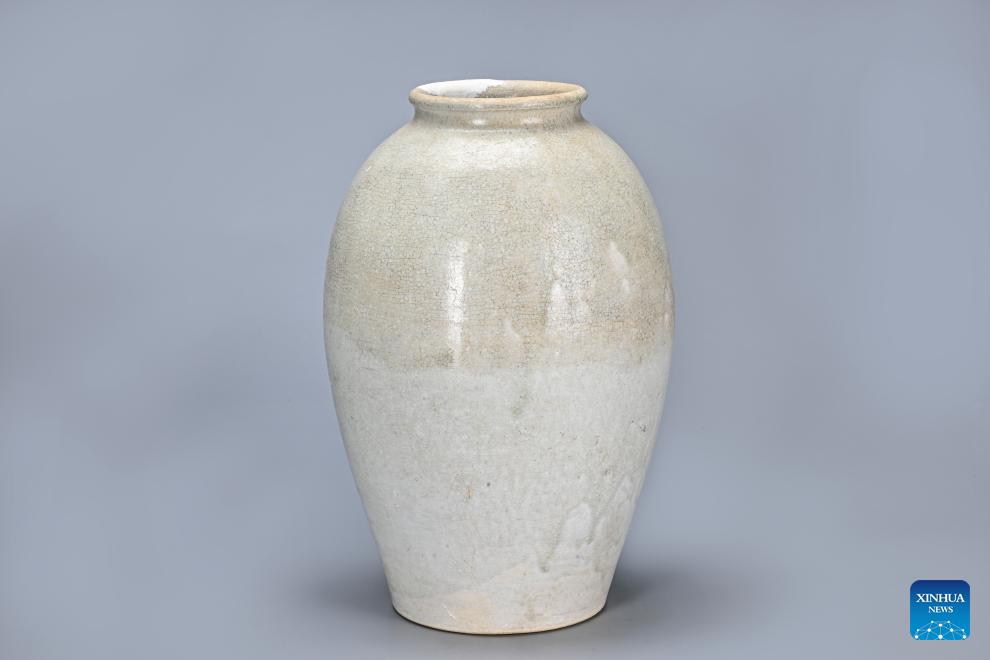
This undated file photo shows a porcelain jar unearthed from the tomb of Ma Sanniang, wife of Dong Shunxian, a military officer in the Tang Dynasty (618-907), in Xi'an, northwest China's Shaanxi Province.(Shaanxi Academy of Archaeology/Handout via Xinhua)
Archaeologists in northwest China's Shaanxi Province have discovered a tomb dating back to the Tang Dynasty (618-907), unearthing a collection of ceramics, bronze ware, and gold and silver artifacts, according to the Shaanxi Academy of Archaeology on Tuesday.
The excavation took place between January 2022 and April 2024 in the Jiali village of Chang'an District in Xi'an, capital of the province, before a local renovation project. Among the ancient tombs in the project area, one labeled M228 was identified as the burial site of Ma Sanniang, wife of Dong Shunxian, a military officer in the Tang Dynasty. She was buried in 698 AD.
A total of 19 items or sets of burial objects were recovered, including pottery, bronze, iron, gold and silver ware, and stone objects. Notably, several of the gold and silver pieces demonstrated exceptional craftsmanship.
According to Shi Sheng, a staff member with the Shaanxi Academy of Archaeology, most of the gold and silver items were hair ornaments for women or containers. The silver jar and stemmed cup are decorated primarily with grape vine patterns, a style influenced by Western Regions, reflecting the vibrant cultural exchanges between China's central plain areas and the Western Regions at the time.
These gold and silver artifacts have significant research value, providing new material evidence for studying cultural and trade interactions between China and other civilizations during the peak time of the Tang Dynasty, Shi added.
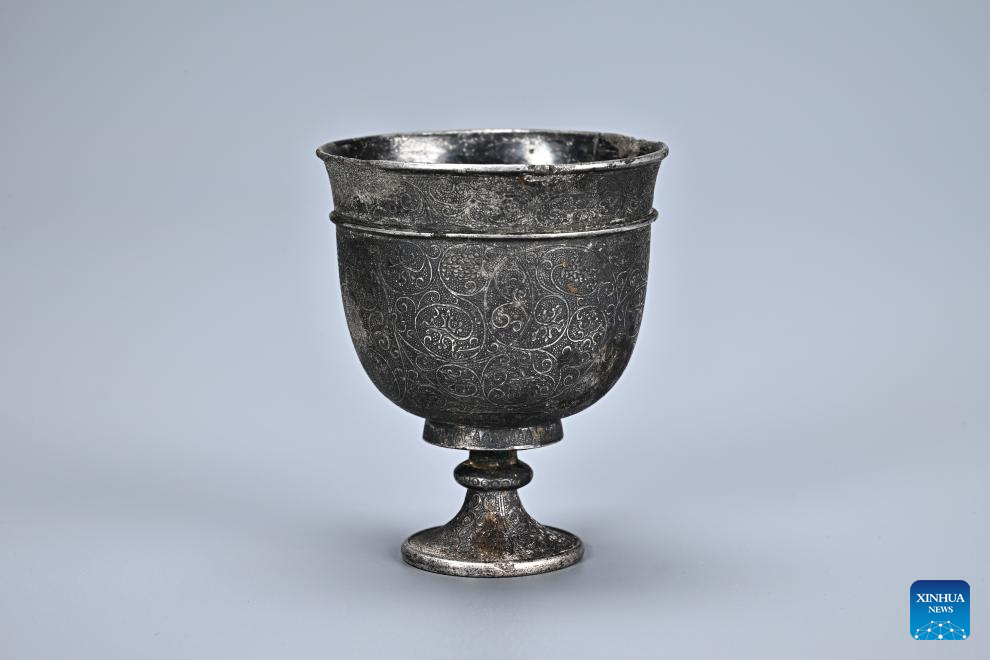
This undated file photo shows a silver stemmed cup unearthed from the tomb of Ma Sanniang, wife of Dong Shunxian, a military officer in the Tang Dynasty (618-907), in Xi'an, northwest China's Shaanxi Province.(Shaanxi Academy of Archaeology/Handout via Xinhua)
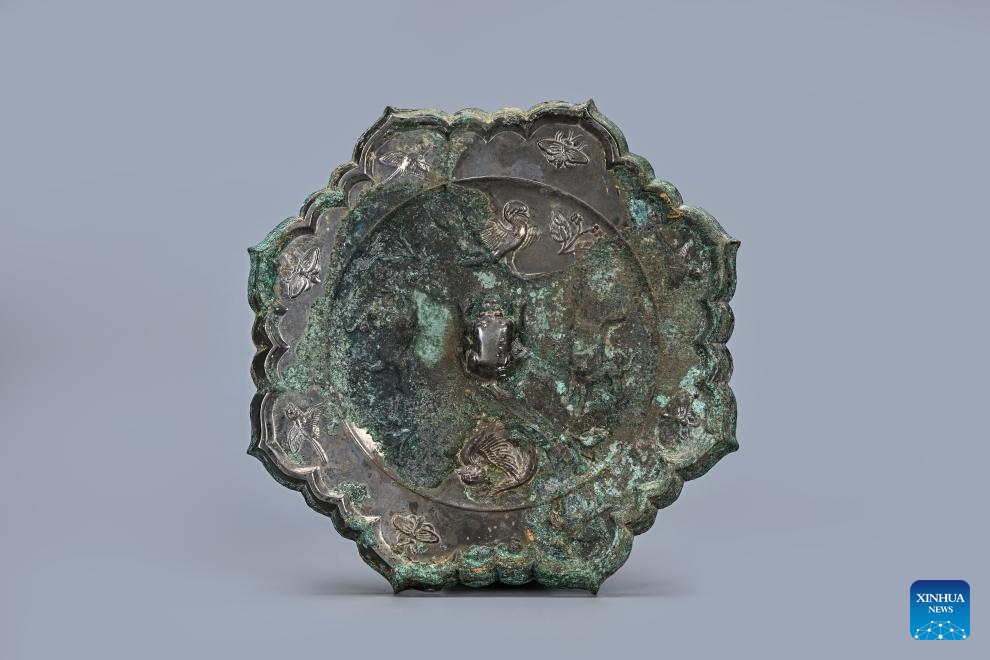
This undated file photo shows a bronze mirror unearthed from the tomb of Ma Sanniang, wife of Dong Shunxian, a military officer in the Tang Dynasty (618-907), in Xi'an, northwest China's Shaanxi Province.(Shaanxi Academy of Archaeology/Handout via Xinhua)
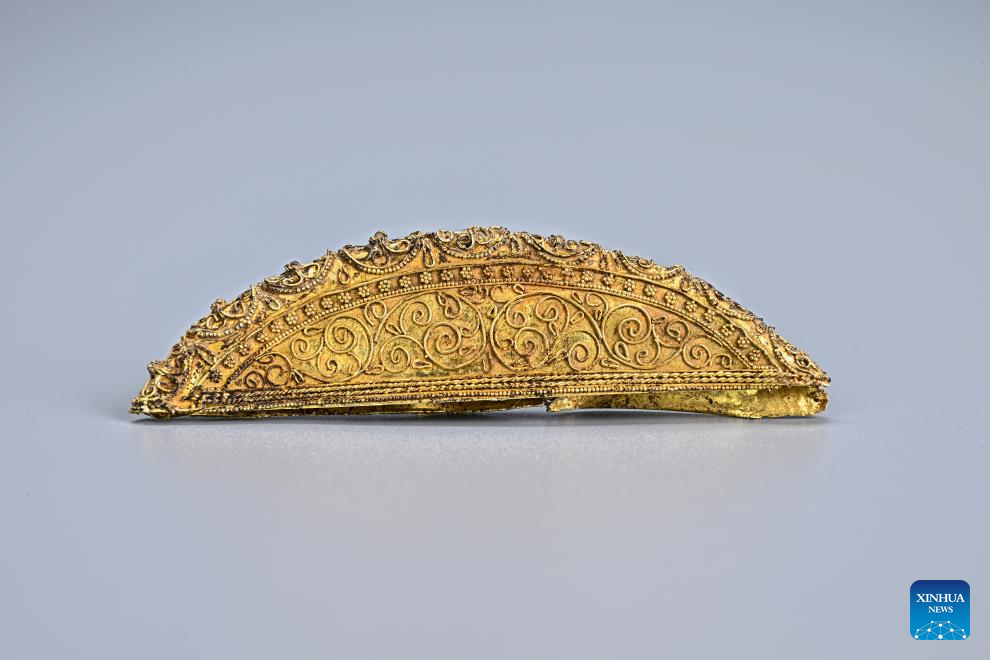
This undated file photo shows a gold hair ornament unearthed from the tomb of Ma Sanniang, wife of Dong Shunxian, a military officer in the Tang Dynasty (618-907), in Xi'an, northwest China's Shaanxi Province.(Shaanxi Academy of Archaeology/Handout via Xinhua)
You May Like
-
Chinese dance performance inspired by Song Dynasty painting ...
The China Oriental Performing Arts Group captivated its audience in New York on Friday with poetic dance drama featuring ancient Chinese aesthetics and innovati...
InKunming 2025-01-14 -
Jade's royal seal of approval
When Emperor Qianlong (1711-99) ascended the throne in 1735, he inherited a court of wealth and a dynasty reaching its apex. Perhaps that partially explains why...
InKunming 2025-01-10 -
Yao needlework crafts a revival
Pan Haiyan demonstrates needlework technique to an apprentice, talks with embroiderers and carries a bundle of fabrics (below left) at her embroidery workshop i...
InKunming 2024-12-23 -
Exhibition of China's Tang Dynasty held in France
The exhibition, directed by China's National Cultural Heritage Administration and the French Ministry of Culture, showcases over 200 pieces or sets of exquisite...
InKunming 2024-11-22 -
Museums key to promoting intl exchanges
Since it opened a special exhibition in September, the Guimet Museum in Paris has drawn throngs of visitors eager to marvel at more than 100 exquisite pieces of...
InKunming 2024-10-18 -
Aerial view of Ciqikou ancient town in Chongqing, SW China
An aerial drone photo taken on Oct. 9, 2024 shows a view of the Ciqikou ancient town in southwest China's Chongqing Municipality. Located by the Jialing River i...
InKunming 2024-10-11 -
Discover the diverse techniques of Miao embroidery
More than a feast for the eyes, Miao embroidery is a testament to exquisite craftsmanship. Using a variety of intricate techniques such as satin stitch, chain s...
InKunming 2024-09-26 -
China's gold artifacts shine in Paris exhibition
Marking the 60th anniversary of the establishment of diplomatic relations between France and China, as well as the 2024 Franco-Chinese Year of Cultural Tourism,...
InKunming 2024-09-19 -
Olympic spirit celebrated in blue-and-white porcelain
In a unique fusion of cultures, the French National Olympic and Sports Committee has recently acquired four exquisite pieces of Chinese blue-and-white porcelain...
InKunming 2024-07-31 -
Traditional Tang Dynasty confections meet Yunnan wild mushro...
Tang Dynasty confections, a traditional craft dating back to the Tang Dynasty in China, are known for their delicate and small shape and bright and colourful co...
InKunming 2024-07-31