Trains, Talks, and Coffee: Kunming 2025 Yearender
Source: InKunming | 2025-12-31 | Editor:Rachel


As high-speed trains cut through mountain ranges and international flights take off and land non-stop, the aroma of coffee drifts along the shores of Dianchi Lake. Over the course of a single year, Kunming has undergone a profound transformation—from a geographic transit hub to a platform for ideas, and from a stopover city to a destination for extended stays.
Late at night, a Lancang-Mekong Express international cold-chain freight train, loaded with tropical fruits from Southeast Asia, rolls into Kunming. At the same time, construction lights remain on at the T2 terminal site of Changshui International Airport. In 2025, this city in southwest China is undergoing a profound transformation of its role.
From an inland hinterland to an open gateway to South and Southeast Asia, from a tourist transit point to an international sojourning destination, Kunming’s 2025 story is written into its expanding transport networks, its international forums of intellectual exchange, and the daily lives of the “new Kunming residents” who choose to stay.
Hub Upgrading: From Transit Corridor to Global Gateway
The arrival of consecutive high-level international forums is no coincidence. Kunming’s growing global appeal in 2025 stems first and foremost in its strengthening connectivity, with the China–Laos Railway emerging as a core engine reshaping the city’s openness.
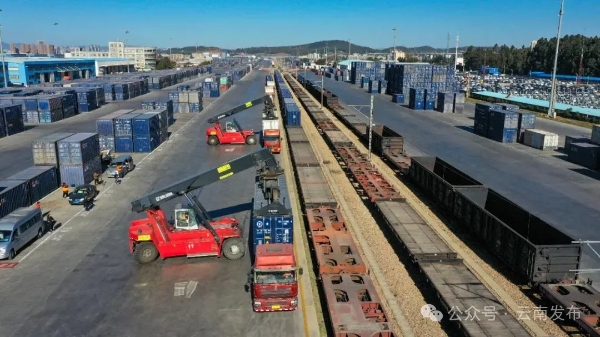
More than four years since its opening, the international railway hit a new stride in 2025. By its fourth anniversary, the China–Laos Railway had operated a total of 64,000 freight trains, transporting over 72.5 million tonnes of cargo.
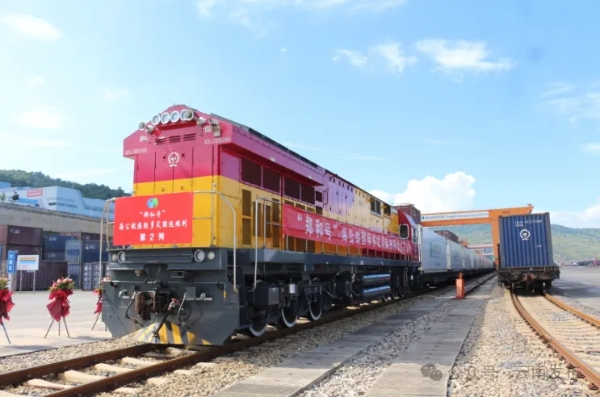
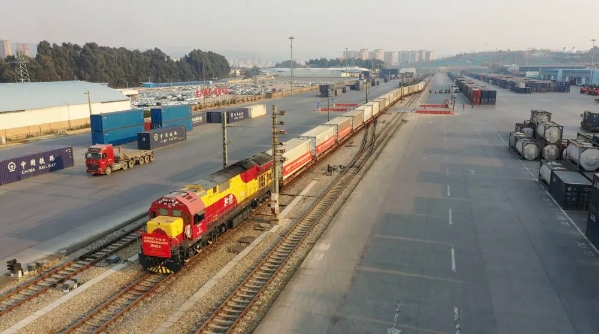
This steel silk road delivers more than statistics—it has triggered deep industrial transformation. Leveraging this “golden corridor,” Kunming International Land Port’s Anning North Port has developed into a major international hub for bulk commodities bound for South and Southeast Asia.

Kunming Changshui International Airport Terminal 2 Rendering, Courtesy of ECADI (East China Architectural Design & Research Institute)
While ground connectivity accelerates, air capacity is expanding as well. The expansion of Kunming Changshui International Airport is fully underway, designed to handle 95 million passengers and 1 million tonnes of cargo annually by 2030. As of December 2025, 67.58% of the concrete structure of the new T2 terminal has been completed, and the eastern second runway has passed final inspection. With an estimated total investment of 66.545 billion yuan, the project is a key initiative through which Yunnan actively supports and integrates into China’s Belt and Road Initiative.
A Platform for Ideas: "Spring City" Voice on the Global Stage

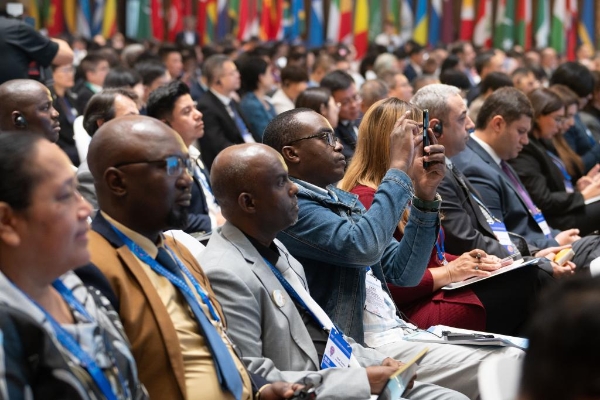
In 2025, Kunming’s international narrative began with two high-level forums that brought together global voices. In September, the Global South Media and Think Tank Forum, themed “Empowering Global South, Navigating Global Changes” took the lead, drawing around 500 representatives from 110 countries and international organizations. The forum released the Global South Media and Think Tank Forum Yunnan Consensus and established a cooperative communication network spanning 95 countries and regions.
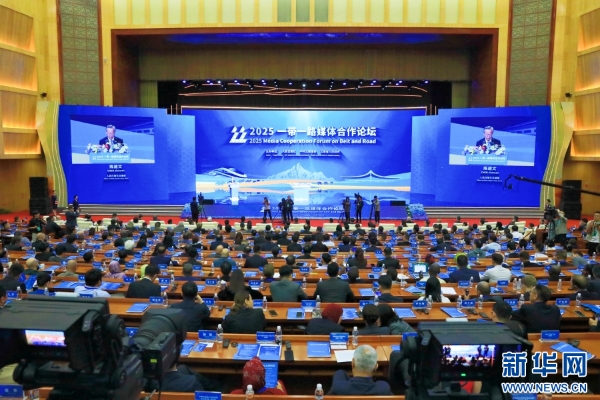
Just over ten days later, the 2025 Media Cooperation Forum on Belt and Road, themed “Shared Media Responsibility for Exchanges and Mutual Learning among Civilizations,” followed. More than 200 media representatives from 87 countries once again placed Kunming in the international spotlight.
Together, the two forums precisely defined Kunming’s unique coordinates in China’s new opening-up landscape—elevating it from a geographic crossroads to a platform for intellectual exchange and civilizational dialogue.
Industrial Breakthrough: From Following to Defining
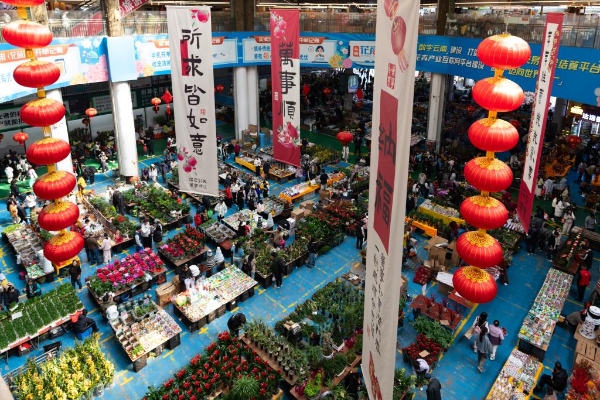
Connectivity drive logistics, and it also incubates industries that represent Kunming and go global. In 2025, two local brands—Yunnan flowers and Yunnan coffee—completed the leap from following industry trends to defining them.



In May, more than 1,000 new rose varieties with independent intellectual property rights were unveiled at the Dounan International Flower Technology Innovation Center. Beyond sheer numbers, the release marked a pivotal shift in Yunnan’s flower breeding—from imitative innovation to original definition. The new varieties break away from traditional cup-shaped forms, introducing collections inspired by Eastern aesthetics, along with targeted breeding of fragrance profiles that blend tea and fruit notes into what is described as an “Oriental Aroma.”


How can a single cup of coffee connect the world? In August 2025, the Dianchi International Coffee Culture Carnival, themed “Brewing with the World, Coexisting with All,” offered a striking answer. Spanning nine days, the event for the first time linked both the eastern and western shores of Dianchi Lake, attracting 2.8059 million visits and setting a new record for Kunming’s cultural tourism events.


An Ideal Sojourn: From Aspiration to Staying
All upgrades in infrastructure and industry ultimately serve a warmer goal: encouraging people to stay. In 2025, Kunming formally set out to become a “sojourning destination,” steering its tourism sector from short-term sightseeing toward long-stay, in-depth living and leisure. Data confirms the momentum. From January to October 2025, Kunming recorded 1.2129 million long-stay visitors, a year-on-year increase of 36.3%, accounting for nearly 30% of the provincial total.


At the Dongfeng Dam opening-and-closing floating bridge along Dianchi Lake, 196,400 visitors were received during the eight-day National Day holiday, turning it into a new link between lake and landscape. Plans are underway to develop a lakeside coffee corridor, enriching cultural and tourism experiences.




The black-headed gulls that return every winter have become Kunming’s most touching ecological icon, turning the vision of “dancing with gulls by Dianchi Lake” into an everyday experience.
In Leju Ancient Village in Xishan District, with a history of over 600 years, old houses have been transformed into boutique guesthouses while preserving stone-paved lanes and century-old banyan trees. In the first few months of 2025 alone, the village welcomed 74,000 visitors, enabling locals to find employment close to home.
Kunming is systematically developing 9 categories of sojourn-oriented industries, spanning urban and rural areas, healthcare, and senior living and five other segments, aiming to create a modern destination where “those nearby are happy, and those far away are drawn to come.”
As night falls, the lights of the Changshui Airport construction site mirror the headlights of trains racing along the China–Laos Railway. According to officials from the Kunming International Aviation Hub project, the airport expansion is scheduled for completion in 2029. Meanwhile, 46 key villages along Dianchi Lake are taking shape gradually, driving a shift from eco-tourism to in-depth sojourn experiences.
From the exchange of ideas at international forums to an ever-expanding transport network, and from the scent of flowers and coffee to a life lived amid mountains and water, Kunming’s 2025 story captures a southwest Chinese city moving from the geographic margins to the forefront of openness. This gateway to South and Southeast Asia is wider, brighter—than ever.
You May Like
-
Yearender: Xi leads China through a pivotal 2025
China rang in the new year on Thursday, closing an extraordinary year widely seen as pivotal for the country's development.
InKunming 2026-01-02 -
Yearender: Setting the record straight, a retrospective look...
Major international organizations, including the World Bank and the International Monetary Fund, have recently raised their economic growth forecasts for Chin...
InKunming 2025-12-25 -
Yearender: Chinese culture resonates through sports
In 2024, sports served as a powerful conduit for global unity, with China using cultural expressions to deepen international understanding and forge lasting cro...
InKunming 2024-12-24 -
Yearender-China Focus: How China fights to alleviate energy ...
The Chinese economy has quickly bounced back from the setback of an energy crunch that caught the world off guard amid the continuous fight against COVID-19 in ...
InKunming 2021-12-29